


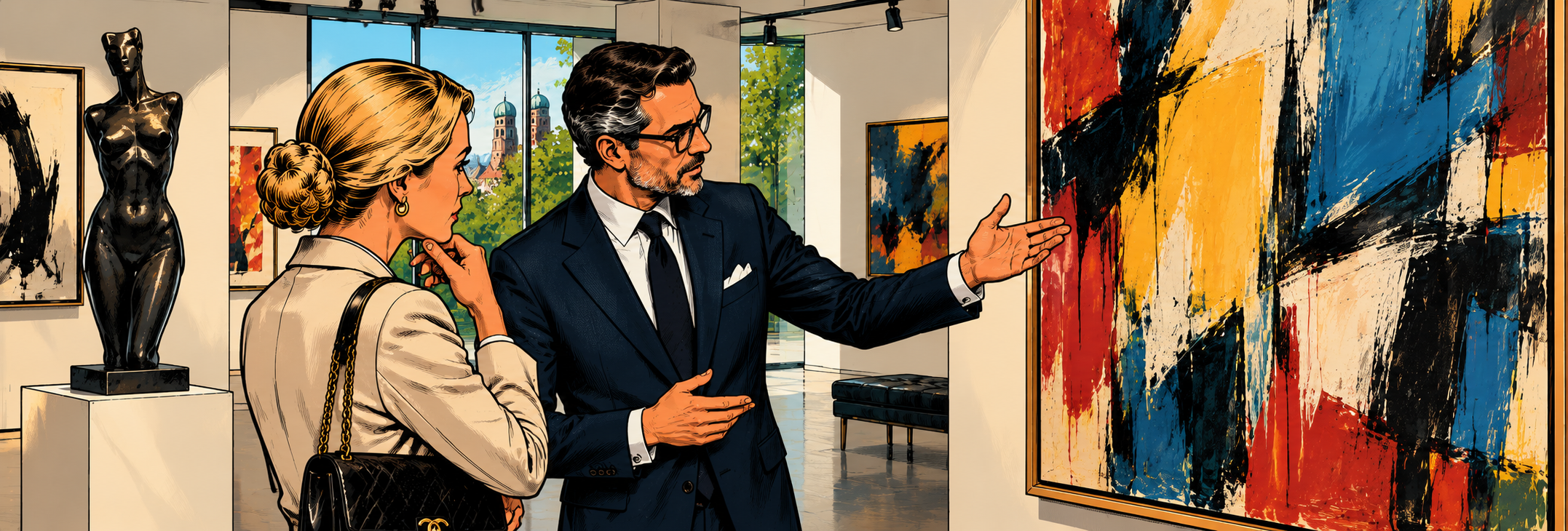
Legal Advice for International Collectors, Buyers and Sellers
Germany has a significant art market with private collectors, galleries, art dealers and auction houses offering works ranging from Old Masters and modern art to contemporary works and important collections.
For an international buyer, however, purchasing a valuable artwork in Germany can raise legal issues that go far beyond agreeing on a price.
Who actually owns the artwork? Is the seller entitled to sell it? What exactly is being represented regarding authenticity and attribution? Is the provenance complete? Are there potential restitution or ownership claims? Can the artwork legally be exported from Germany? And which law and courts will apply if a dispute arises?
These questions are particularly important in private sales, where valuable artworks may be sold directly between collectors or through dealers, brokers and other intermediaries without the standardised procedures of an auction house.
We advise international collectors, buyers, sellers, family offices, galleries, art dealers and other participants in the art market on acquiring and selling artworks in Germany.
Our work includes pre-purchase due diligence, negotiating and drafting art purchase agreements, structuring private sales and advising on authenticity, provenance, title, payment, delivery, export and disputes arising from art transactions.
Buying Art in Germany as a Foreign Collector
Foreign collectors can purchase artworks in Germany. However, before committing to a significant acquisition, the legal and factual position should be examined carefully.
Depending on the artwork and transaction, relevant questions may include:
- Who is the legal owner of the artwork?
- Is the seller authorised to sell it?
- Is the provenance sufficiently documented?
- What exactly is represented regarding authenticity and attribution?
- Is the artwork included in a catalogue raisonné?
- Are there relevant certificates or expert opinions?
- Has the artwork been materially restored or altered?
- Could third parties have ownership or restitution claims?
- Is there any indication that the artwork was stolen?
- Does its provenance between 1933 and 1945 require further investigation?
- Can the artwork be exported from Germany?
- When must the purchase price be paid?
- When will ownership and possession pass to the buyer?
- Which law governs the transaction?
- Which courts will have jurisdiction if a dispute arises?
For high-value acquisitions, addressing these issues before signing or paying the purchase price can substantially reduce the legal and economic risks of the transaction.
Private Art Sales in Germany
Important artworks are frequently sold privately rather than at public auction.
A private sale can offer considerable advantages. The parties can maintain confidentiality, negotiate the transaction individually and determine the contractual structure themselves.
However, this flexibility also creates risks.
There may be no auction house establishing standard procedures for payment, delivery and documentation. The parties must therefore determine for themselves how the transaction will be structured and which representations and warranties the seller will provide.
For an international buyer participating in a private sale in Germany, particular attention should be paid to:
- the identity of the seller,
- the seller’s ownership and authority to sell,
- the precise identification of the artwork,
- authenticity and attribution,
- provenance,
- condition and previous restoration,
- third-party claims,
- purchase price and payment mechanics,
- escrow arrangements,
- delivery and transfer of title,
- export licences,
- transport and insurance,
- applicable law and jurisdiction, and
- remedies if representations later prove incorrect.
For valuable artworks, these matters should be addressed in a written purchase agreement rather than left to informal correspondence or oral understandings.
Art Purchase Agreements under German Law
German law does not provide a special statutory regime exclusively for the purchase of art. The general rules of German sales law apply, but they must be adapted to the particular characteristics of the art market.
Under § 433 of the German Civil Code (Bürgerliches Gesetzbuch – BGB), the seller must deliver the object and transfer ownership free from material defects and defects of title, while the buyer must pay the agreed purchase price and accept delivery. Gesetze im Internet
For an important artwork, the purchase agreement should identify the work precisely. Depending on the transaction, this may include:
- artist,
- title,
- date or period,
- medium,
- dimensions,
- signature or inscriptions,
- catalogue raisonné reference,
- provenance,
- exhibition history, and
- relevant certificates or expert opinions.
The agreement should also clearly establish which statements concerning the artwork are contractually binding.
This can be particularly important for authenticity, attribution, provenance and condition.
German sales law expressly attaches significance to the agreed characteristics of the purchased object. The contractual wording can therefore become decisive if a dispute later arises.
Authenticity and Attribution
Authenticity is one of the principal risks when acquiring valuable art.
The legal question is not necessarily identical to the art-historical question.
An artwork may be sold expressly as an original work by a named artist. Alternatively, the seller may use qualified descriptions such as “attributed to”, “workshop of”, “circle of”, “school of” or “after”.
These distinctions can materially affect the buyer’s legal position.
Before acquiring a significant artwork, it may therefore be appropriate to review the available expert opinions, catalogue raisonné entries, provenance documentation and scientific examinations.
The purchase agreement should then reflect as precisely as possible what the seller is actually representing about the artwork.
For disputes concerning forged or misattributed works, see our separate page on Art Forgery & Authenticity Disputes in Germany.
Provenance Due Diligence
Provenance is not merely an art-historical issue.
The ownership history of an artwork can affect its legal status, marketability and value.
A provenance review may reveal questions concerning:
- previous ownership,
- theft or loss,
- Nazi-persecution-related dispossession,
- previous auction or dealer transactions,
- unlawful export from a country of origin, or
- conflicting ownership claims.
A gap in provenance does not automatically mean that an artwork has a legal problem.
However, unexplained gaps or inconsistencies may justify further investigation before a high-value acquisition is completed.
This is particularly important for works that circulated in Europe between 1933 and 1945 and for antiquities or cultural objects originating from jurisdictions with strict export laws.
Does the Seller Actually Own the Artwork?
One of the most fundamental questions in an art transaction is sometimes overlooked: Does the seller have good title to the artwork?
A purchase agreement alone does not necessarily resolve all questions of ownership.
An artwork may have been stolen, lost, entrusted to another person, inherited by several heirs or transferred through a complicated chain of transactions.
In private sales, the person negotiating the transaction may also be an intermediary rather than the owner.
Before a significant acquisition, it can therefore be important to establish both the identity of the owner and the authority of the person conducting the sale.
This is especially relevant where confidentiality arrangements mean that the buyer initially communicates only with a dealer, broker or adviser.
Buying Art Through a German Gallery or Art Dealer
When purchasing through a gallery or art dealer, it should be clear in what capacity the dealer is acting.
The gallery may own the artwork and sell it on its own account.
Alternatively, it may offer the artwork on consignment for a collector or artist, or act merely as an intermediary between buyer and owner.
This distinction can affect who becomes the buyer’s contractual counterparty and who is responsible for statements concerning authenticity, provenance, condition and title.
For high-value transactions, the legal roles of the participants should therefore be established before the purchase is completed.
Brokers and Intermediaries in Private Art Sales
International private sales frequently involve brokers, advisers and other intermediaries.
Sometimes several intermediaries stand between the ultimate seller and buyer.
This can create considerable legal and commercial uncertainty.
Before proceeding, it may be necessary to determine:
- whom the intermediary represents,
- whether the intermediary has authority to negotiate or conclude the transaction,
- whether the intermediary knows the identity of the actual owner,
- whether the buyer will contract directly with the owner,
- who is responsible for representations about the artwork,
- whether commissions are payable,
- by whom those commissions are paid, and
- whether more than one intermediary is receiving compensation.
For high-value transactions, the structure should be transparent enough to establish who owes which contractual duties to whom.
Confidentiality and NDAs in Private Art Sales
Discretion is an important feature of the private art market.
Sellers may not want their ownership of an important artwork disclosed. Buyers may likewise wish to keep their identity or acquisition confidential.
Non-disclosure agreements can therefore be appropriate before sensitive information about an artwork, its owner or the proposed transaction is disclosed.
However, confidentiality should not prevent the buyer from carrying out the legal, provenance and authenticity checks reasonably required for the acquisition.
An NDA should therefore permit disclosure to lawyers, tax advisers, provenance researchers, art experts and other professional advisers where necessary for due diligence.
Escrow and Secure Payment
Payment mechanics require particular attention where an international buyer and German seller do not know each other personally.
For high-value private sales, an escrow arrangement can reduce transaction risk.
The parties may agree that the purchase price will be released only when specified conditions have been satisfied, for example:
- execution of the purchase agreement,
- confirmation of the seller’s title,
- delivery of agreed provenance documentation,
- receipt of certificates or expert opinions,
- issuance of a required export licence,
- delivery of the artwork, or
- another agreed closing condition.
The precise mechanics should be established before funds are transferred.
An escrow arrangement does not replace legal due diligence, but it can help coordinate payment, documentation and delivery.
Condition and Previous Restoration
The physical condition of an artwork can materially affect its value.
Before acquiring a significant work, the buyer may therefore wish to obtain a condition report or have the artwork examined by a qualified conservator.
Relevant issues can include previous restoration, overpainting, structural damage, relining, replaced components or other alterations.
If particular aspects of the condition are important to the buyer’s decision, they should not necessarily be left solely to informal discussions.
Depending on the transaction, the purchase agreement can record relevant condition information or allocate the risk of particular known issues.
Exporting Art Purchased in Germany
A foreign buyer should determine before completing the purchase whether the artwork can legally be exported from Germany.
German and European cultural property rules may require an export licence depending on factors including the nature, age, value and destination of the cultural object.
This can be particularly important for buyers intending to take an artwork to the United States, United Kingdom, Switzerland or another country outside the European Union.
The fact that an artwork has been validly purchased does not necessarily mean that it can immediately be exported.
Where exportability is essential to the buyer, the purchase agreement can address the allocation of this risk and, where appropriate, make completion or payment conditional upon the required export authorisation.
For further information, see German Cultural Property Law.
Transporting the Artwork Abroad
Once the purchase is completed, the artwork may need to be transported from Germany to the buyer’s home country.
For valuable artworks, the transport arrangements should be coordinated with the contractual closing.
Questions may include:
- who selects and instructs the fine art shipper,
- who bears the transport costs,
- when the risk of accidental loss or damage passes,
- who arranges insurance,
- whether specialist packing is required, and
- which export and customs documents must accompany the artwork.
Transport liability and insurance coverage are separate legal issues and should not be assumed to be identical.
Buying Art at a German Auction
Purchasing art at auction differs from a negotiated private sale.
The auction house’s terms and conditions, catalogue description, buyer’s premium, attribution terminology and rules concerning liability can materially affect the buyer’s position.
The auction house may also act in a different legal capacity from a gallery or dealer selling its own inventory.
International bidders should therefore review the applicable auction terms before bidding on a significant artwork.
For further information, see German Art Auction Law.
Selling Art in Germany
We also advise international owners wishing to sell artworks located in Germany or to German collectors, galleries, dealers or auction houses.
Relevant questions can include:
- selection and structure of the sale,
- direct sale or intermediary arrangement,
- consignment,
- seller representations and warranties,
- provenance disclosures,
- authenticity and attribution,
- confidentiality,
- purchase price and payment security,
- delivery and transfer of title,
- commission arrangements, and
- applicable law and jurisdiction.
For a foreign seller, it can be particularly important to understand which representations made during negotiations may later become relevant if the buyer alleges that the artwork was not as described.
Which Law Applies to an International Art Sale?
Cross-border transactions raise questions of both applicable law and jurisdiction.
A foreign buyer purchasing an artwork physically located in Germany from a German seller should not simply assume that every aspect of the transaction will automatically be governed by German law.
The answer depends on the circumstances and contractual arrangements.
For a significant international private sale, the purchase agreement should therefore normally address applicable law and jurisdiction expressly where legally permissible.
These questions should be considered before a dispute arises rather than after the parties’ relationship has broken down.
What If Problems Arise After the Purchase?
Disputes may emerge months or even years after an art transaction.
An artwork may be declared inauthentic, its attribution may change, a third party may assert ownership, previously unknown restoration may be discovered or provenance information may prove incorrect.
The available remedies depend on the purchase agreement, applicable law and individual circumstances.
Under German law, the contractual characteristics of the purchased object are central to the assessment of a material defect.
Potential remedies may include rescission or unwinding of the transaction, reduction of the purchase price or damages, depending on the legal requirements.
Where the contract contains exclusions or limitations of liability, their scope and effectiveness must also be examined.
If a dispute arises, we assess not only the substantive legal position but also the burden of proof and available evidence. This reflects the litigation-oriented approach of the firm’s existing art practice.
Dr. Louis Rönsberg – German Art Lawyer
Dr. Louis Rönsberg is a German-qualified lawyer and partner at SLB LAW in Munich.

He advises German and international clients on high-value art transactions and disputes, including purchases and sales, private sales, auctions, authenticity, provenance, ownership and cultural property issues. His practice also includes litigation concerning the unwinding of art purchases and disputes over authenticity and provenance.
International clients can conduct their communication with our German Art Law team in English.
Where appropriate, we work with provenance researchers, art historians, conservators and other specialised experts.
Legal Advice on Buying and Selling Art in Germany
We advise international collectors, buyers, sellers, family offices, galleries and art dealers throughout the transaction.
Our work includes:
- pre-purchase legal due diligence,
- review and negotiation of art purchase agreements,
- structuring private sales,
- title and ownership issues,
- authenticity and attribution,
- provenance and restitution risks,
- NDAs and confidentiality agreements,
- brokers and commission arrangements,
- escrow and closing mechanics,
- export and cultural property issues,
- transport and insurance arrangements, and
- disputes following an art purchase.
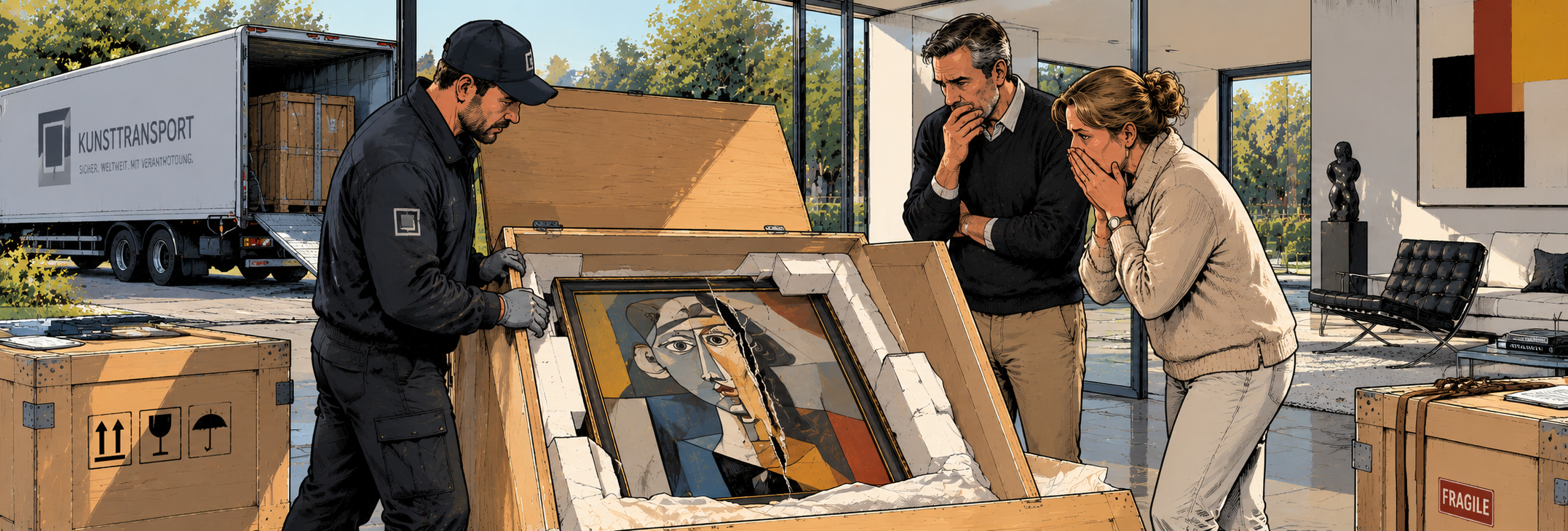
For a substantial acquisition, legal advice is generally most effective before the purchase agreement is signed and the purchase price is transferred.
FAQs
I have been offered an artwork in a private sale in Germany. What should I check before buying it?
The appropriate due diligence depends on the artwork and transaction, but important questions generally include the identity and title of the seller, authenticity and attribution, provenance, condition, third-party claims and whether the artwork can be exported to the buyer’s country. The contractual structure is equally important. The agreement should establish precisely what is being sold, which representations the seller makes, how and when payment is made, when the artwork is delivered and what happens if a material representation proves incorrect. For a high-value private sale, these issues should ideally be reviewed before signing or transferring funds.
Can I buy an artwork from a German seller without knowing the owner’s identity?
This can create significant legal risks. Private art sales often involve intermediaries and confidentiality. However, a buyer acquiring a valuable artwork generally has a legitimate interest in establishing that the person selling the work owns it or has authority to dispose of it. If confidentiality prevents immediate disclosure of the owner’s identity, the transaction can sometimes be structured so that the necessary title verification occurs at an appropriate stage before closing. Confidentiality and proper legal due diligence are not mutually exclusive.
Should I use an escrow arrangement when buying expensive art in Germany?
For a high-value private sale, escrow can be useful, particularly where buyer and seller do not know each other or where certain conditions must be satisfied before closing. For example, release of the purchase price can be linked to delivery of the artwork, title documentation, provenance records or a required export licence. The appropriate structure depends on the transaction. Escrow reduces certain payment and performance risks but does not replace due diligence concerning the artwork and seller.
How can I make sure that an artwork purchased in Germany can be exported?
Exportability should be examined before the buyer becomes unconditionally committed to the transaction.
Depending on the artwork’s category, age, value, status and destination, German or European cultural property rules may require an export licence.
If export is essential to the transaction, the purchase agreement can allocate this risk and, where appropriate, make closing conditional on obtaining the necessary authorisation.
What happens if an artwork purchased in Germany later turns out to be fake?
The legal consequences depend particularly on what the seller contractually represented and which law governs the transaction. Under German sales law, whether the purchased object has the agreed characteristics is central to determining whether it is defective. Depending on the circumstances and legal requirements, the buyer may have rights including unwinding the transaction, reduction of the purchase price or damages. The purchase agreement, sales description, invoices, correspondence, expert opinions and other evidence should therefore be preserved.
Can I rely on a certificate of authenticity or catalogue raisonné entry?
Such documents can be highly relevant, but they should not automatically be treated as an absolute legal guarantee.
Their significance depends on who issued them, what they actually state and how they relate to the contractual description of the artwork.
For important acquisitions, authenticity due diligence may require a combination of art-historical assessment, provenance research and, where appropriate, scientific examination.
Which law applies if I buy art from a German seller?
It depends on the transaction. International sales can raise complex questions concerning applicable law and jurisdiction. The location of the seller or artwork is relevant but does not necessarily resolve every issue. For a significant cross-border transaction, the parties should consider including an express choice-of-law and jurisdiction clause where appropriate and legally effective.

Are You Planning to Buy or Sell an Artwork in Germany?
We advise international collectors, buyers and sellers on high-value art transactions and private sales in Germany – from legal due diligence and contract negotiation to provenance, authenticity, title, escrow arrangements, export and closing.
If you have been offered an artwork by a German collector, gallery, dealer or intermediary, we can review the proposed transaction and advise you under German law before you sign the purchase agreement or transfer the purchase price.